
Board Ready: Key Skills Women Need to Transition from Industry Roles to Governance Roles

Photo by Benjamin Child on Unsplash
by Dr. Sybille Buchwald-Werner
One year ago, I made a conscious decision to begin my own board readiness journey. At the end of 2025, I completed the IMD Board Readiness Diploma. While the diploma was important, the journey itself was the true value. It was a year of learning, unlearning, reflection, and exposure to how governance truly works in practice, not as theory, but as lived responsibility.
What made the experience transformative was not only the intellectual depth of governance, risk, and long-term value creation, but the intensity of debate, simulations, and peer learning. Real boardroom dynamics were brought to life, forcing disciplined thinking and perspective shifts. It challenged my executive reflexes and reshaped how I show up in the boardroom. What became clear very early on is that board readiness is not a milestone. It is a mindset shift.
Industry roles reward execution; board roles reward judgment. This distinction is subtle but fundamental, and it is often where the transition from industry leadership to governance becomes difficult. Many women do not struggle because they lack insight or experience. They struggle because their instincts have been shaped by years of being valued for delivering solutions.
In executive roles, speed, ownership, and operational precision are strengths. In the boardroom, those same instincts can work against effective governance. Women often find themselves offering solutions too quickly, sliding back into operational detail, or feeling responsible for outcomes they no longer control. These responses come from competence and commitment, but governance requires a different posture. The value of a board member lies not in providing answers, but in asking the right questions, challenging assumptions without owning execution, and making decisions despite incomplete information. Governance is not about doing more; it is about deciding better.

Photo by Kampus Production from Pexels
Operational excellence remains a powerful asset at board level, but only if it is consciously reframed. Boards are not extensions of management teams. Their mandate is to safeguard the long-term interests of the company. Directors focus on long-term value creation, risk oversight, capital allocation, CEO succession and performance, and the integrity of culture and ethics. These are the levers that determine whether a company remains resilient and trustworthy over time.
Women transitioning from R&D, commercial, regulatory, or operational leadership often bring deep functional expertise. The challenge is not depth, but altitude. Governance requires stepping back from the mechanics of execution and assessing whether the chosen direction is right, sustainable, and aligned with the company’s purpose and risk appetite. This means shifting from questions of how something is done to whether it should be done at all, and from optimizing functional KPIs to weighing enterprise-level trade-offs. This reframing is one of the most critical, and most underestimated, board-readiness skills.
You do not need to be a CFO to be an effective board member, but you do need to be financially and risk fluent. Financial literacy is a baseline expectation in governance. Boards rely on all directors to engage meaningfully with financial information, challenge assumptions, and understand the consequences of strategic decisions. Directors are expected to read and question financial statements, understand cash flow, capital structure, and funding strategy, and assess downside scenarios and risk exposure.
“True board presence is not performative. ”
Many women underestimate themselves in this area, even when they have managed significant budgets or overseen investment cases. What is often missing is not competence, but confidence in applying financial judgment at board level. That confidence does not come from perfection. It comes from fluency, the ability to engage, question, and decide with clarity.
One of the hardest transitions into governance is psychology. Board members are individually accountable, collectively responsible, and explicitly expected to disagree, constructively and in the best interest of the company. Many women, shaped by environments that reward collaboration and harmony, tend to underplay independence of thought. In the boardroom, cohesion does not mean agreement. Effective governance depends on directors who are willing to surface dissenting views and test assumptions.
True board presence is not performative. It shows in speaking early rather than waiting for consensus to form, in holding a considered position under pressure, and in remaining steady when opinions diverge. This is not about being louder. It is about being clear, anchored, and principled, and recognizing that thoughtful dissent is a core condition of good governance.
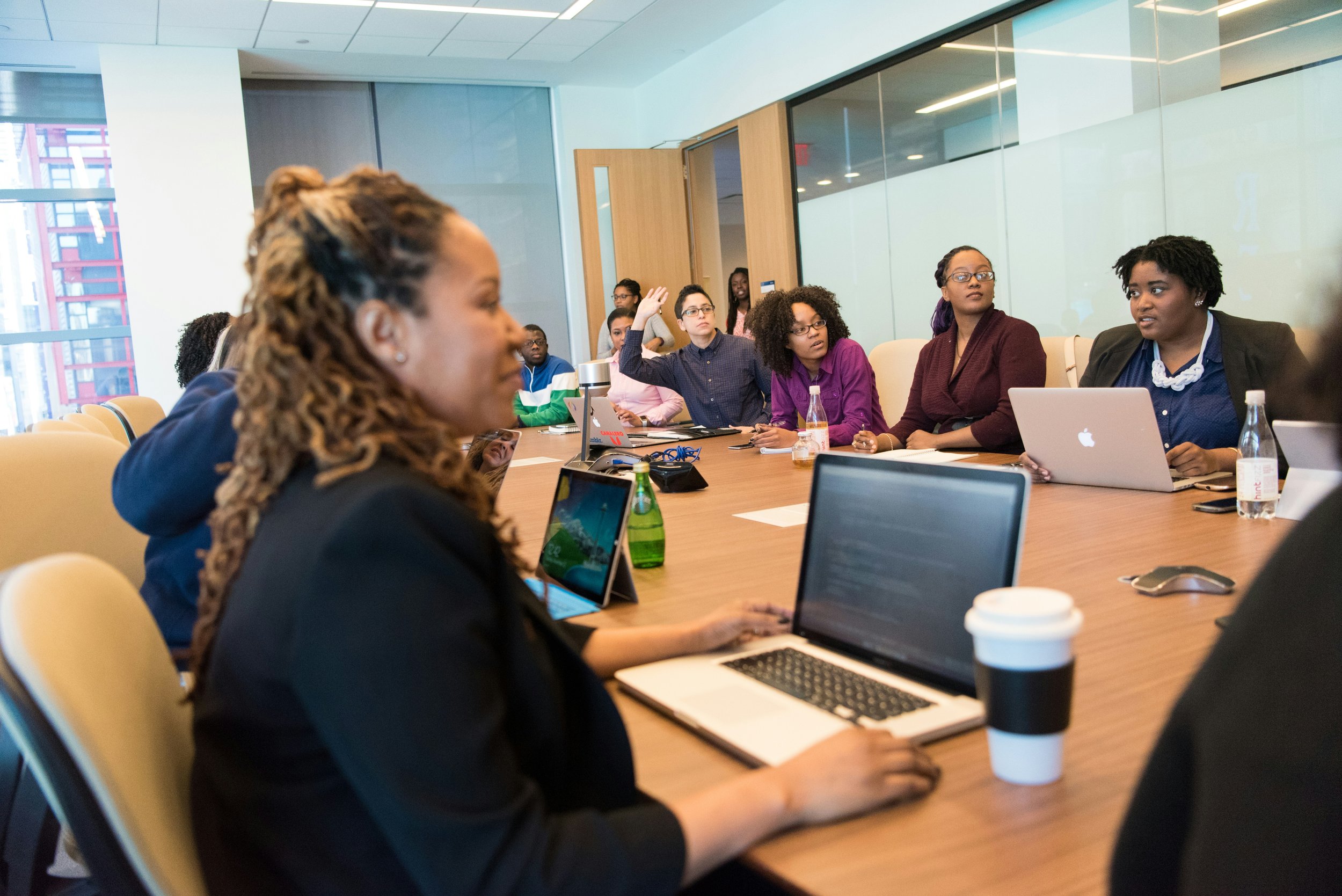
Photo by Christina @ wocintechchat.com M on Unsplash
Boards do not recruit former executives for their titles. They recruit directors for the value they bring. Appointments are driven by specific governance needs, gaps in perspective, experience, or judgment that the existing board must address. Women who transition successfully into governance articulate a clear governance value proposition. They understand the lenses they bring to the table and can explain how those perspectives complement, rather than replicate, existing board profiles.
Board readiness accelerates when the internal question shifts. Instead of asking, “Am I ready?”, successful candidates ask, “What problem can I help this board solve?” That shift reframes experience as contribution and moves the conversation from personal qualification to organizational need.
Today, I genuinely enjoy my board mandates. At the same time, I am sometimes taken aback by the weight of responsibility they carry. Governance is stewardship, for the company, for the people who trust and rely on boards, and for decisions whose consequences unfold over years. Unlike executive roles, where authority and control are closely linked, board roles demand accountability without operational levers.
Standing at the graduation ceremony in Lausanne with the diploma in my hands was a powerful moment, not because it marked an end, but because it confirmed a beginning. This diploma is not a finish line. It is the foundation for my continued work as an independent board director, contributing with integrity, strategic perspective, and long-term thinking in an increasingly complex world.
I may not have all the answers.
But I am board-ready now.

About the Author
Dr. Sybille Buchwald-Werner is an independent board director, governance advisor, and founder of Newday, a science-driven consultancy operating at the intersection of life sciences, strategy, and responsible innovation. She serves on international boards and advises companies on governance, transformation, and long-term value creation. In April 2025, she was elected to serve on the Women in Nutraceuticals (WIN) Board.
If you would like to continue the conversation or participate in a dedicated Q&A session on board readiness and governance careers with Dr. Sybille, please contact the WIN team for further information.
