
Closing the Gap in Women’s Health: Nutrition, Leadership, and the Path Forward

Photo by Sweet Life on Unsplash
By Rena First
During International Women’s Month, this essay examines the intersection of nutrition science, leadership, and commercialization—and why closing women’s health gaps requires both scientific insight and the women shaping innovation inside the nutraceutical industry.
This International Women’s Month, the nutraceutical industry has an opportunity to do more than acknowledge the gaps in women’s health. Let us define them clearly and prioritize them strategically. Let’s identify the levers that help close the gender gap in both health and economics. Progress depends not only on scientific breakthroughs, but on who carries them forward.
One way to cut through the noise is by examining nutrition gaps—both micronutrients and macronutrients—that may influence women’s health across the lifespan.
This piece is part of an ongoing Women in Nutraceuticals (WIN) mentor series, spotlighting the women inside our industry who are working to address these gaps—not in theory, but in practice.
This essay examines two parallel architectures. The first is biological: how specific nutrients are associated with systems that contribute to women’s long-term health and resilience. The second is professional: how women in commercial science roles influence which innovations gain visibility, investment, and scale. These systems are interconnected.
The women featured in this series operate at the intersection of nutrition science, bioactive innovation, and clinical research translation. They work with compounds studied for their potential roles in cellular pathways, metabolic health, and long-term outcomes. Their work reflects another form of influence: advocacy. Just as bioactive compounds influence biological pathways, leadership shapes markets, mentorship networks, and boardrooms. Health and financial progress are interconnected, and when women lead at that intersection, both biology and economics can shift together.
Sales remains one of the most direct yet underleveraged pathways to executive leadership and capital influence. In many companies, senior leadership roles are often filled by individuals with revenue-driving backgrounds. Yet research suggests women may apply for advancement opportunities less frequently unless they meet most listed qualifications. A frequently cited analysis in the Harvard Business Review discusses how this dynamic may influence leadership pipelines.

Photo by Annemarie Grudën on Unsplash
Women in the United States earn approximately 82% of what men earn, according to data from the U.S. Bureau of Labor Statistics. Women also perform a larger share of unpaid caregiving work globally. Research from the Organisation for Economic Co-operation and Development (OECD) shows that women spend significantly more time than men on unpaid caregiving and domestic work. Women also hold a smaller share of CEO roles across major corporations. In revenue-facing environments—where influence is closely tied to capital allocation and strategic direction—these disparities can compound.
Women generally live longer than men but often spend more years managing health challenges later in life. Global health data from the World Health Organization show that increases in life expectancy have not always been matched by increases in years lived in full health. At the same time, women’s health research has historically lagged in some areas, with long-standing gaps in sex-based representation in clinical research highlighted by the NIH Office of Research on Women’s Health.
Population-based intake data from the NIH Office of Dietary Supplements suggests many women do not consistently meet recommended intakes for key nutrients, including vitamin D, iron, calcium, folate, and magnesium. Research may exist for decades, but without commercial fluency and strategic advocacy, it may not reach formulation scale or consumer awareness. Leaders who understand both data and distribution play a key role in determining whether innovation remains niche or becomes standard.
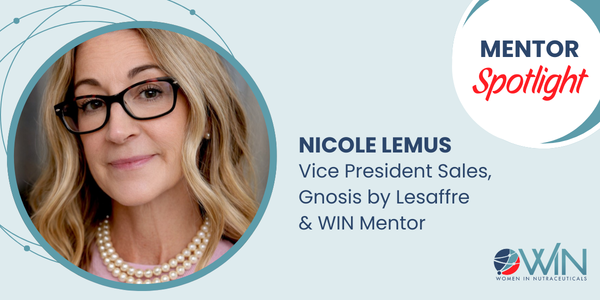
One industry leader whose career reflects this intersection of science, commerce, and mentorship is Nicole Lemus. With more than two decades of experience spanning commercial leadership, sales, operations, manufacturing, private label, and global distribution, she has developed a bird’s-eye view of how nutrition science becomes product—and where that translation can break down.
Her leadership illustrates an important principle: in science-driven industries, mentorship and market education can act as force multipliers. She has worked in roles that influence how health solutions reach consumers, including sales leadership, operations, manufacturing, and commercial strategy.
I interviewed Nicole for a podcast series on generational gender empowerment in 2018 in a feature published by SupplySide Journal. What stood out was not only her technical fluency, but her commitment to mentorship. She continues to mentor women into revenue-driving and operational roles, expanding the number of women shaping strategy, capital allocation, and category direction from inside the system.
Closing these gaps will require continued collaboration across science, formulation, policy, and commercial leadership—ensuring that research insights translate into practical solutions that reach women at scale.
This International Women’s Month, let us do more than acknowledge the gaps in women’s health. Let us define them clearly and prioritize them strategically. When women are well nourished and supported by science, it can help support cognitive performance, expand leadership opportunities, and contribute to long-term wellbeing. When women also occupy the commercial roles that shape formulation, capital flow, and market visibility, progress can accelerate.
As professionals in this industry, we have both the expertise and the platform to help raise the standard for how women’s health is researched, formulated, and advanced. That is not simply an opportunity. It is a responsibility.
This essay is part of the ongoing Women in Nutraceuticals mentor series and will continue in podcast form, featuring conversations with leaders exploring the intersection of science, commercial strategy, and women’s leadership.
